Everything you need to know about Japandi
The Japandi style emerged relatively recently and immediately gained popularity, first in Australia and then around the world.
Whether it's a lasting trend or just a passing fad remains to be seen. However, it's already safe to say that, thanks to its uncomplicated beauty, simplicity, and the friendly, calming atmosphere it creates, this style has the potential to become a permanent fixture in interior design.
What is Japandi?
As the name suggests, it's a design hybrid created by combining Japanese and Scandinavian styles, taking the best from each.
Japanese style evokes a distaste for excess, moderation in choosing decorative accessories, a recognition of beauty in the simplest of things, a love of nature and tranquility, while Scandi evokes comfort, functionality, and coziness. And what effect does this conflation of interior design conventions, at least geographically, have?

Characteristics of the Japandi Style
Japandi style décor is ascetic, yet not devoid of homely warmth and decorative value. It's a carefully considered arrangement, down to the smallest detail. All its elements are carefully selected and attract attention with their understated yet effective form and clean lines.
It lacks furniture and accessories that serve no purpose and only introduce visual chaos. For this reason, Japandi-style interiors are close to minimalism rooted in Japanese Zen ideology, but at the same time, they combine many features typical of Nordic design, and this is precisely why they can be acceptable to many Scandinavian style enthusiasts.
How to decorate a Japandi-style interior?
It won't be difficult if you follow our tips. Here they are:
The most important characteristic of the Japandi style is moderation!
Strictly adhere to this criterion when selecting all interior elements. Avoid excessive furniture and decorations. Leave only those in the room that catch the eye with their simple yet refined shapes and refined details. Remember, you'll appreciate their beauty more when the abundance of forms and decorations doesn't distract you. And of course, you won't clutter the interior, which is unacceptable in this style.
Japandi loves carefully selected materials.
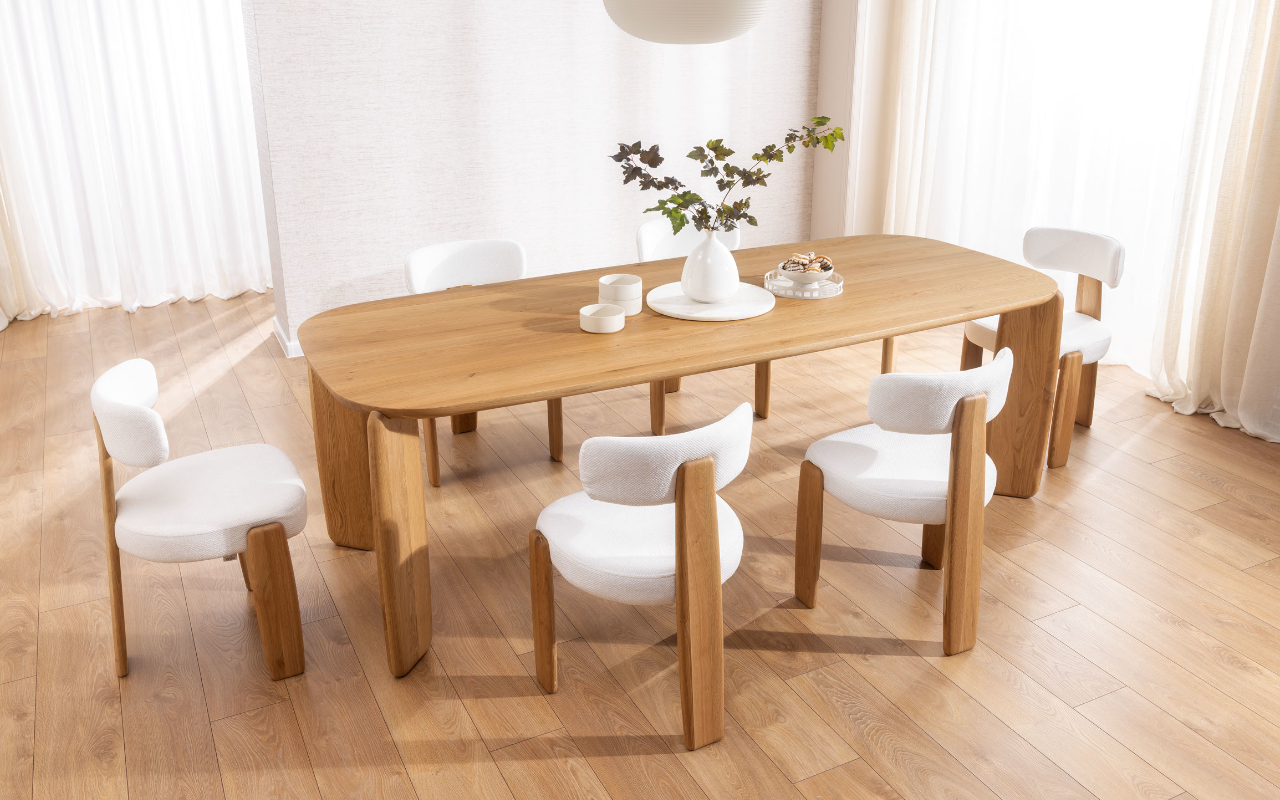
No plastic imitations, even the most faithful ones. Only natural materials! Above all, plenty of wood, as it gives the Japandi style its distinctive character. Wood is to be used not only for furniture, but also for flooring and even wall cladding, either in whole or in part.
Choose wood species with a deep color, but you can also combine dark and light ones. And—very importantly—this material doesn't have to look flawless. The more knots and signs of wear and tear, and the more pronounced the grain, the better and more Japanese it will be, as the popular aesthetic in that country, known as wabi-sabi, encourages us to see beauty in imperfection. Besides wood, the décor should also include plant-fiber woven fabrics, linen, wool, and cotton fabrics, ceramics, and stone.

Japandi furniture—only the essentials!
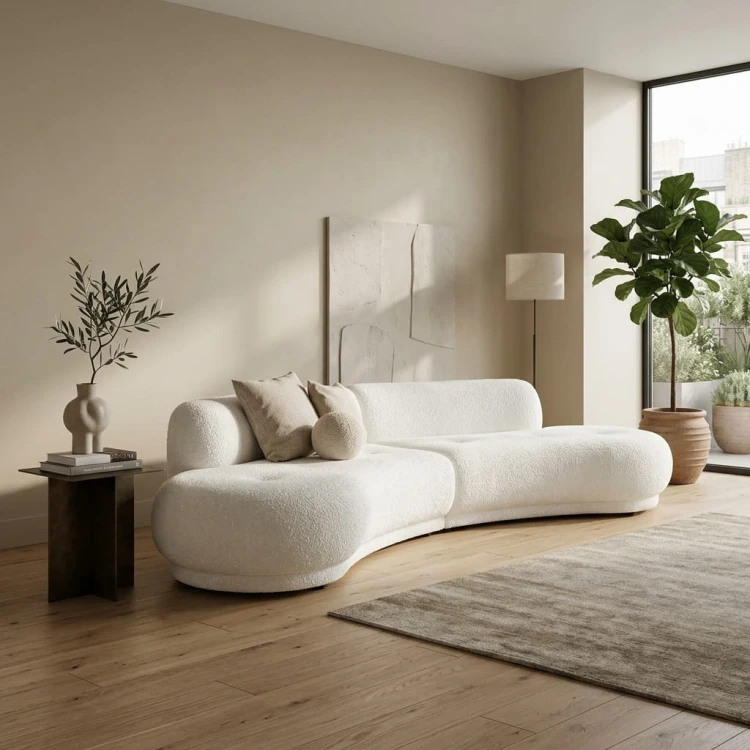
The living room features a Scandinavian-style sofa and swivel armchair, with upholstered seats featuring soft lines and rounded edges. Next to them is a low, dark wooden table with quartz top, clearly reminiscent of traditional Japanese design. The table can also be typical of a Scandinavian interior, meaning it should be light in color, but it must be paired with dark brown or black chairs.
Since the hallway and bedroom offer spacious storage spaces in tall units, the living room doesn't need much storage space. A modern sideboard or a wooden commode , preferably with an interesting front, will suffice – they will not only be practical but also enhance the interior.
Subdued Japandi Colors
Earthy tones characteristic of both styles dominate: off-whites, beiges, and grays, but also typical Far Eastern browns and blacks, and muted green, which in Japan symbolizes peace and optimism.
The accent colors of fire, synonymous with life and energy in this country, such as red, orange, and yellow, appear as accents, but not in pure shades, but in muted shades, for example, leaning towards red or ochre. Instead, you can also use small amounts of emerald green or indigo, typical of the Orient.

What accessories are best for the Japandi style?
First and foremost, they should attract attention with their shape, texture, and color. In a restrained interior, their beauty will shine through. It could be an arrangement of flowers or dry branches in a ceramic vase, a beautiful plant in a pot, or a sophisticated graphic on the wall. Its theme should be inspired by nature, just like other motifs featured on decorative fabrics, such as pillows. Floral patterns can also adorn a rug, but it's better to choose a plain one – such a large, patterned, and multicolored surface could disrupt the tranquility of the arrangement.
Remember good lighting
What should Japandi lighting be like? Designers opinions are divided on this matter. Some suggest paper or rattan lampshades inspired by Asian lanterns. Others believe the lighting should be reminiscent of Scandinavian interiors, with modern, simple forms. Both agree, however, that the lighting should be varied!
It's best to install chandeliers and wall sconces, and complement them with table and floor lamps, whose soft light will create a warm and cozy atmosphere. Instead of matching sets, why not opt for fixtures in both Japanese and Scandi styles, mixing them? You certainly can't go wrong.
Madison upholstered armchair is a modern interpretation of classic comfort. Its rounded shape and soft, upholstered seat invite you to relax, while the delicate, textured fabric adds a cozy touch to any interior.
ALASKA accent armchair is an elegant and modern piece of furniture that captivates with its soft, enveloping form and timeless style.
2. Sofas and Corner Sofas
Gio is a modular upholstered sofa with a unique character, distinguished by its rounded shapes that lend it a delicate and elegant feel.
The Cavola sofa is a harmonious combination of modern japandi style sofa, comfort and attention to detail.